Aluminium vs laminate tubes: the barrier decision
For pharmacy and derma products, the tube is part of the stability data. What impact-extruded aluminium gives you that ABL does not, and where laminate wins.
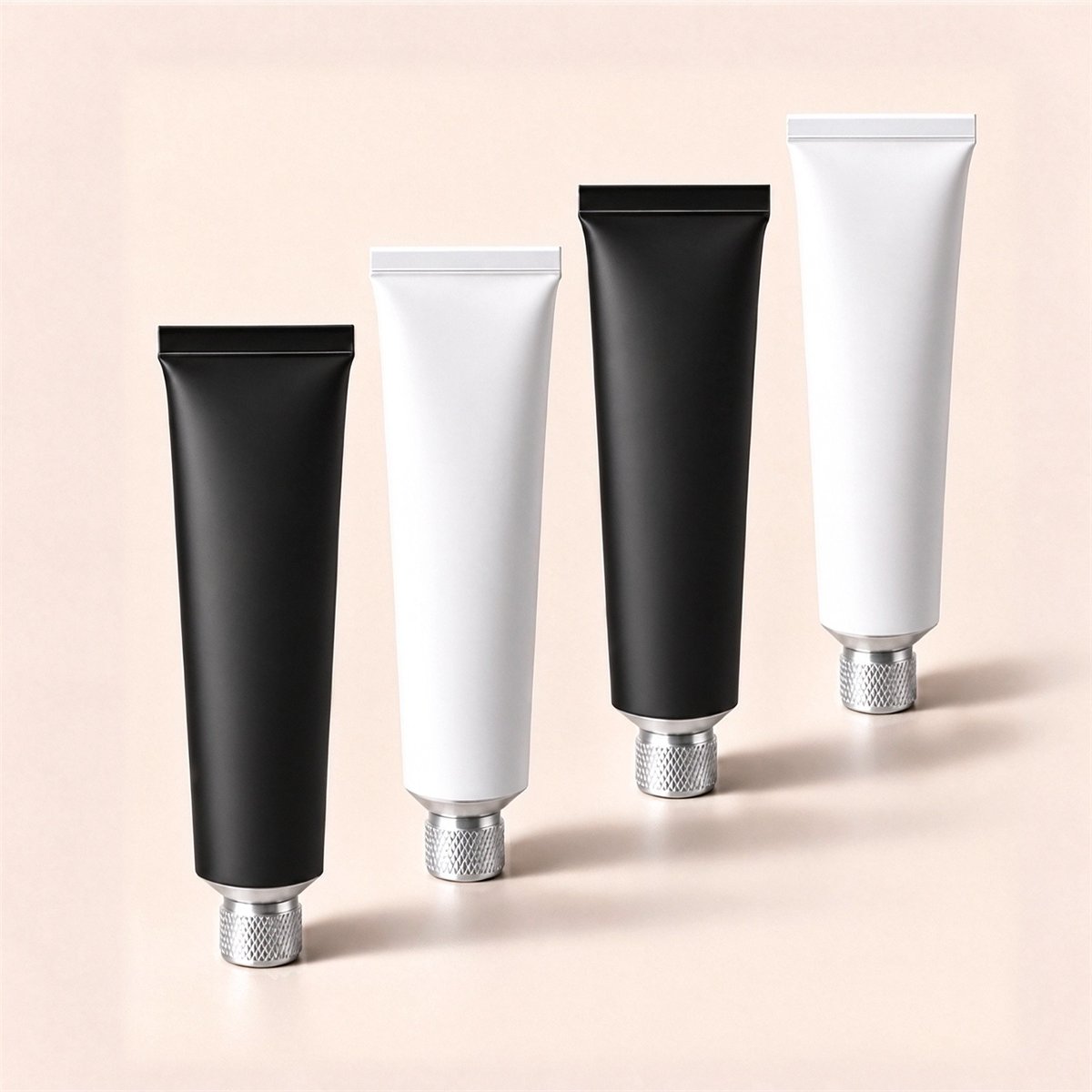
Three tubes, three barrier levels. The choice is usually made by the stability protocol, not by the packaging brief.
Impact-extruded aluminium
A solid aluminium slug is impact-extruded into a tube, then trimmed, threaded and lacquered. There is no seam and no plastic layer, so the barrier is absolute: no oxygen, no water vapour, no light.
That is why aluminium remains the default for pharmacy ointments, eye ointments and any product where a two-year shelf life is a regulatory commitment rather than a marketing claim.
The complication is chemical: the metal must be isolated from the formula by an internal lacquer. Lacquer selection depends on pH, solvent content and the presence of chlorides. Get it wrong and you get pinholes, blackening or a metallic taste — after the stability run, not before.
ABL: aluminium inside a laminate
ABL sandwiches a thin aluminium foil between plastic films. Barrier is close to aluminium for oxygen and light, and the pack behaves like a plastic tube: it is lighter, it does not dent permanently, and it prints with offset quality on a smooth surface.
The aluminium layer is thin enough that flex-cracking is a real risk if the tube is abused; specify a foil thickness appropriate to the fill volume and the distribution route.
PBL: plastic barrier
PBL uses EVOH instead of foil. Oxygen barrier is lower than ABL, water vapour barrier is decent, and the tube is PE-based, so it can enter the PE recycling stream with a PE cap.
PBL is the right choice for skincare and sun care in markets where a recyclability position matters. It is not the right choice for a pharmacy ointment that needs absolute protection.
Decision sequence
- Is the product a medicine or a pharmacy-adjacent topical with a stability commitment? Aluminium.
- Is it an oxygen-sensitive cosmetic with a premium print requirement? ABL.
- Is it a mainstream cosmetic where the brand makes a recyclability claim? PBL.
- Is it a short-cycle or cost-driven product? Single-layer PE, and accept the barrier you get.
Practical checks
- Ask for the lacquer specification, not just "internal coating".
- Run a 12-week accelerated stability test in the actual tube, filled on the actual line.
- Check the crimp: aluminium crimps differently from laminate, and a bad crimp is the most common leak path in both.
- Confirm the cap material — a metal tube with a PP cap is normal, but the recycling claim disappears.
None of this is exotic. It is simply the difference between buying a tube and buying a pack that survives its own shelf life.
Where to go next
See the two families side by side: aluminium tubes and ABL and PBL tubes.
Specifying this for a real product? Send the drawing or a reference sample.