How to choose the right material for your cosmetic packaging
PET, PETG, PE, PP and glass each solve a different problem. A practical comparison for brand owners and product developers specifying a pack for the first time.
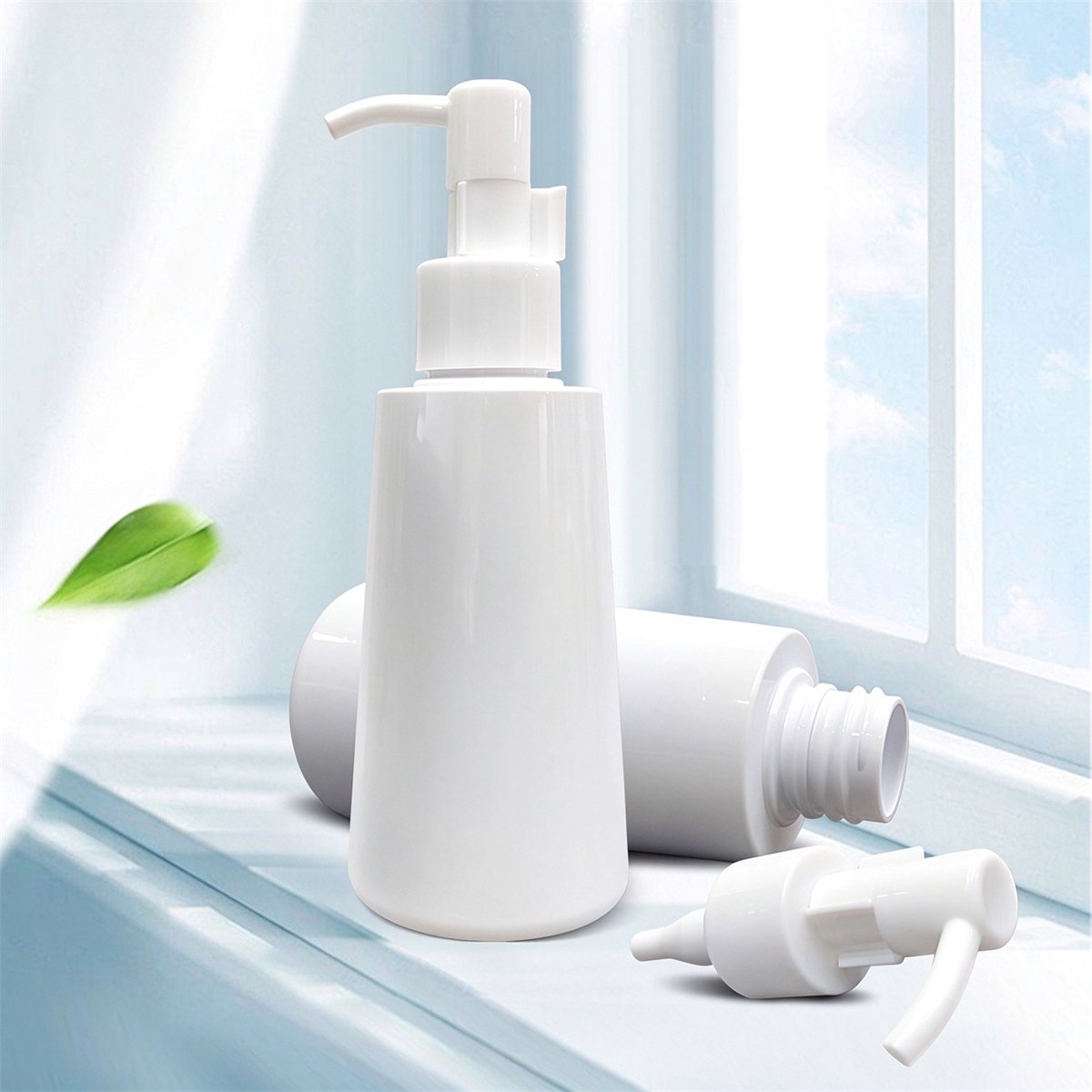
Material choice is usually decided too late. By the time a formula is stable and a launch date is fixed, the pack is often specified from a mood board rather than from what the formula actually needs. The result is a bottle that clouds, a tube that splits at the shoulder, or a jar whose lid will not hold torque after six months in a warehouse.
This guide covers the five substrates we run most often, and the questions that decide between them.
PET: clarity at the lowest cost
PET is the default for clear lotion and toner bottles. It has good clarity, good stiffness, and the lowest resin cost of the clear options. It is also the most recycled plastic in the world, which matters if the pack carries a recycling claim.
The limits are chemical. PET hydrolyses in the presence of water over long periods, and it is sensitive to high pH and to some solvents. For an alcohol-based product above roughly 20% ethanol, or a formula with a high water activity and a two-year shelf life, PETG or glass is usually safer.
PETG: the premium clear
PETG is a glycol-modified PET. It is clearer and glossier than PET, accepts thick walls without stress whitening, and can be moulded with a heavy base that reads as glass. It is also easier to decorate with UV metalizing.
It is softer than PET, so it scratches, and it costs more per unit. Use PETG where the pack is the brand statement: serums, essences, premium toners. Use PET where volume and cost dominate.
HDPE: the workhorse for squeezable
HDPE is opaque, chemically inert, and squeezable with good recovery. Shampoo, conditioner, body wash and cleansing milk almost always belong here. It is compatible with PCR content at high percentages and it takes colour masterbatch evenly, which hides batch variation in recycled resin.
It cannot be made clear. If the brief requires a transparent shampoo bottle, the material is PET or PETG, not HDPE.
PP: jars, closures and airless
PP has the best heat resistance of the commodity polyolefins and the best hinge fatigue, which is why caps, flip-tops and airless pistons are PP. For jars, PP is the practical choice for balms, scrubs and masques where glass weight is not wanted.
PP is translucent rather than clear, and it is harder to print on than PET without surface treatment. Both are solved in production, but they should be decided before artwork is approved.
Glass: barrier and weight
Glass gives an absolute barrier and a premium weight that no plastic reproduces. For a 30 ml serum in amber glass with a dropper, the pack is doing real work: protecting photosensitive actives while signalling value.
The trade-offs are freight cost, breakage in transit, and tooling cost for anything non-standard. For export to markets with expensive last-mile delivery, the landed cost of glass is often 30-40% above the ex-works price.
Questions that settle the choice
- What is the pH and solvent load of the formula, and what is the target shelf life?
- Does the product need to be seen, or does opacity help the brand?
- Is the pack squeezable, pourable, or dispensed by pump?
- Which decoration is planned, and does the substrate accept it?
- What recycled content, if any, must the pack carry?
- What is the landed cost ceiling, including freight and duties?
Answer those six before requesting samples. It removes most of the rework we see, and it usually shortens the sampling cycle from three rounds to one.
Where to go next
If the material is settled, the next decision is the format. Browse plastic bottles, cream jars and cosmetic tubes to see what each substrate looks like when it is decorated.
Specifying this for a real product? Send the drawing or a reference sample.