Dual-chamber tubes: when two formulas must stay apart
Two-in-one products need the ingredients to meet at the nozzle, not in the tube. How co-extruded dual chambers work, what ratios are possible, and what filling demands.
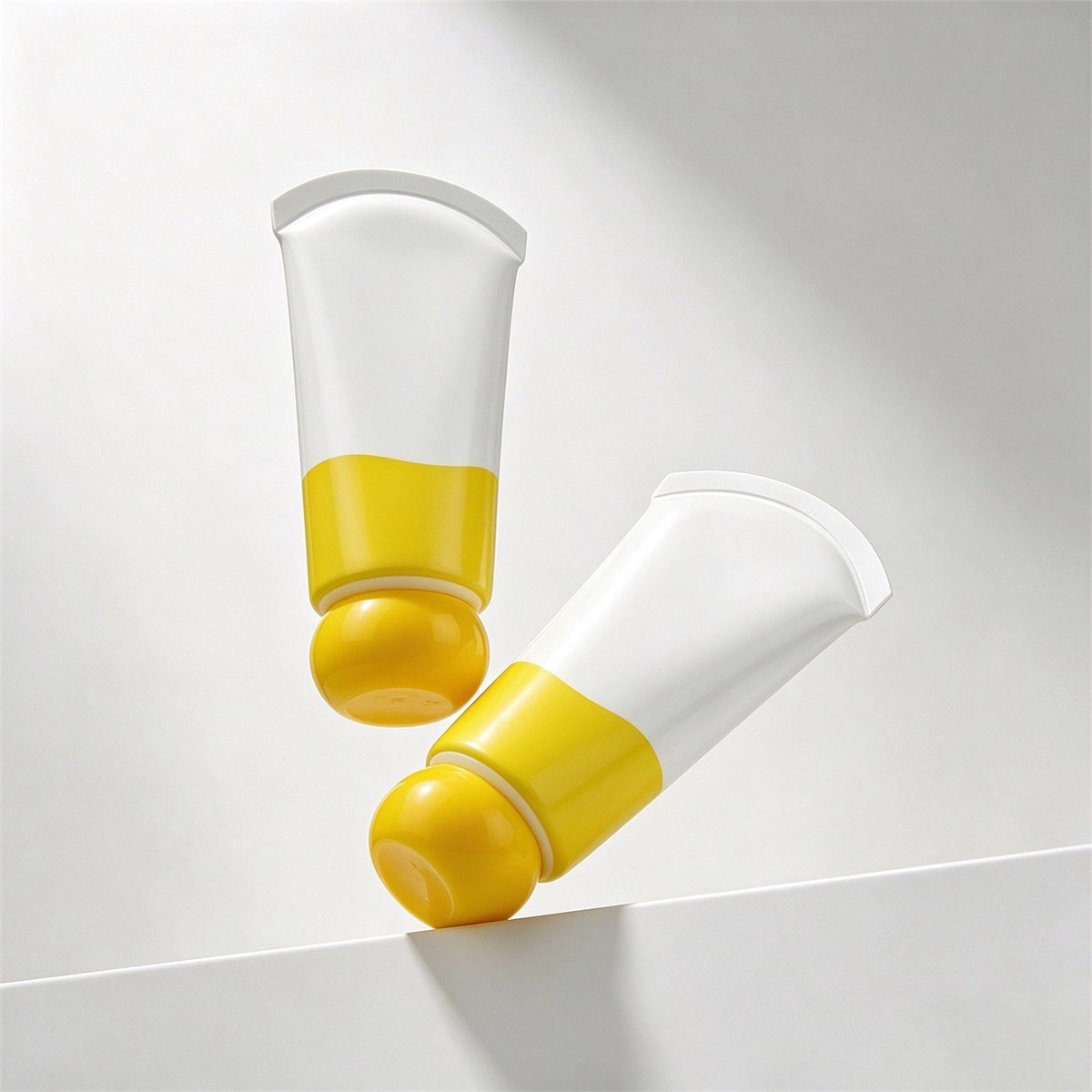
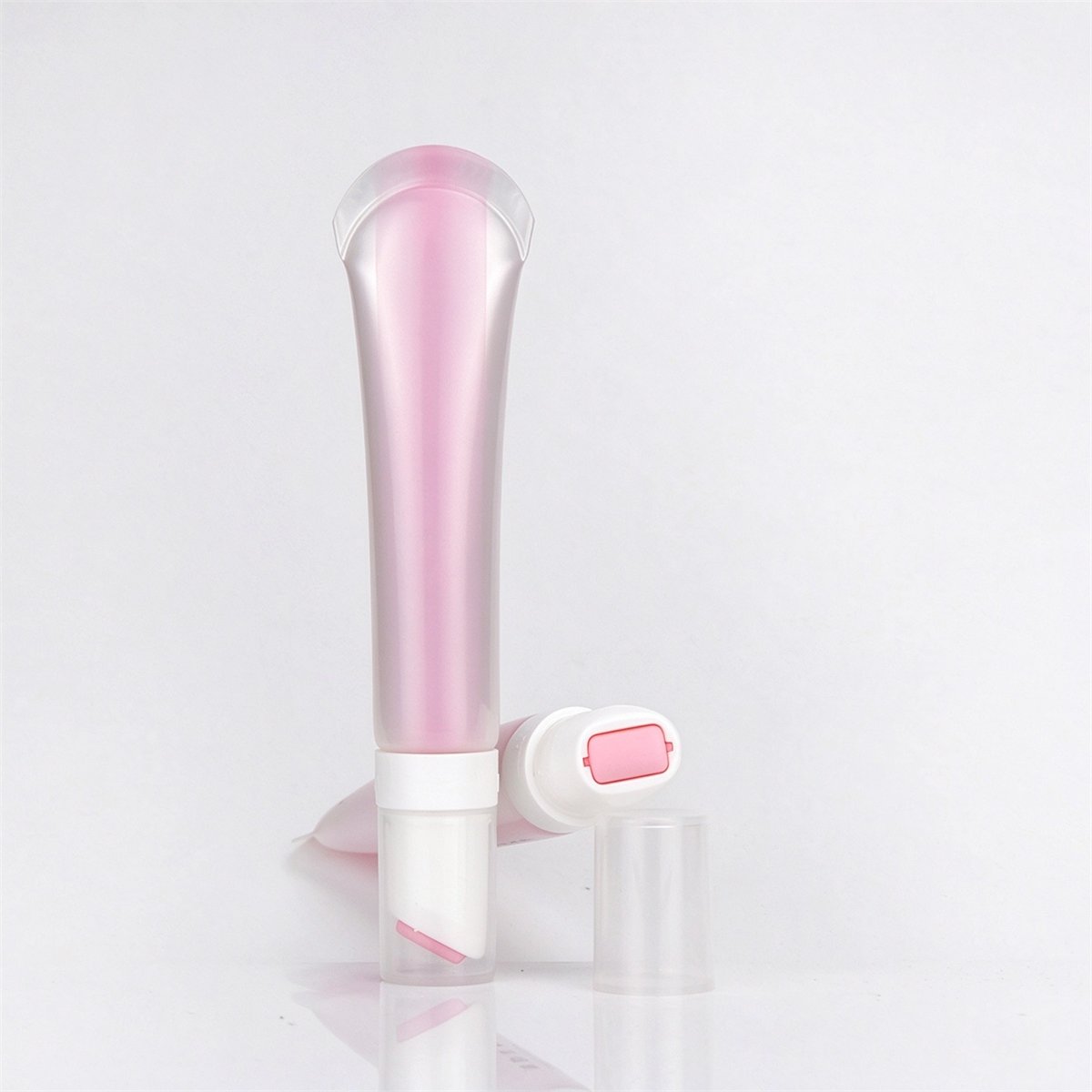
A dual-chamber tube looks like a normal tube with a complicated cap. Inside, it is two tubes sharing one wall, and that changes both the formulation options and the filling process.
Why separate the chambers
Three product concepts need it:
- Actives that degrade in contact. Vitamin C and a pH-neutral carrier, AHA and a neutraliser, enzyme and substrate.
- Textures that must not blend. A gel and a cream dispensed side by side for a visible stripe.
- Ratios the consumer cannot get wrong. A 10:1 booster-to-base ratio set by geometry rather than by a dropper.
If the two parts are compatible, a single chamber with a mixing cap is cheaper and simpler. Dual chamber earns its cost when separation is the product.
How the tube is made
The body is co-extruded with an internal web that runs the length of the tube and splits it into two chambers. The shoulder is moulded with two ports that meet at a dual nozzle. Because the web is part of the extrusion, the ratio is fixed at tooling: 50/50 is the most common, with 60/40 and 70/30 available on dedicated tools.
That is the first constraint to accept: you cannot change the ratio later without a new tool.
Nozzle design
The nozzle controls whether the two streams stay separate or merge. A partitioned orifice keeps a visible stripe; a small mixing chamber blends them in the cap as they exit.
Stripe designs need matched viscosities — if one stream is much thinner it spreads and swallows the other. Test with both formulas at production temperature, not at room temperature in a lab.
Filling
Dual-chamber filling is the part that surprises brands. The tube is filled from the open base, both chambers at once, through a two-port nozzle on the filling machine. Most contract fillers have single-port lines; a dual-port head is either an adapter or a different machine.
Plan for:
- a filling trial before production, because fill balance between chambers is what customers notice;
- a check that both chambers crimp flat and seal at the same pressure;
- a scrap allowance above a single-chamber run, typically 3–5% for the first batch.
Cost and MOQ
Dual-chamber tooling is more expensive than single-chamber tooling, and the extrusion line runs slower. Expect a unit cost roughly 40–70% above a comparable single tube at the same decoration level, and an MOQ around 15,000 pieces.
The economics work when the format is the product idea — a two-step mask, a boosted serum, a colour-plus-developer kit. They rarely work when the second chamber is only a marketing device.
Where to go next
Dual-chamber is a tooling decision as much as a formulation one. Start with the tube range at cosmetic tubes and send the two formulas for a compatibility check via contact us.
Specifying this for a real product? Send the drawing or a reference sample.