MOQ, tooling and sampling: a realistic timeline
What actually happens between a brief and a delivered container, how long each stage takes, and where projects lose weeks.
A packaging project rarely fails because the factory cannot make the part. It fails because the timeline was built on the assumption that sampling starts the day the brief arrives. Here is what the sequence actually looks like.
Stage 1: drawing and quotation (3-5 days)
Send the format, capacity, material, decoration and target quantity. If a similar mould exists, we quote from that tool and send stock samples. If not, we quote tooling separately with a drawing for approval.
The single biggest delay here is an incomplete brief: no target quantity, no decoration plan, no closure decision. Each gap produces a quotation that has to be revised.
Stage 2: tooling (18-30 days)
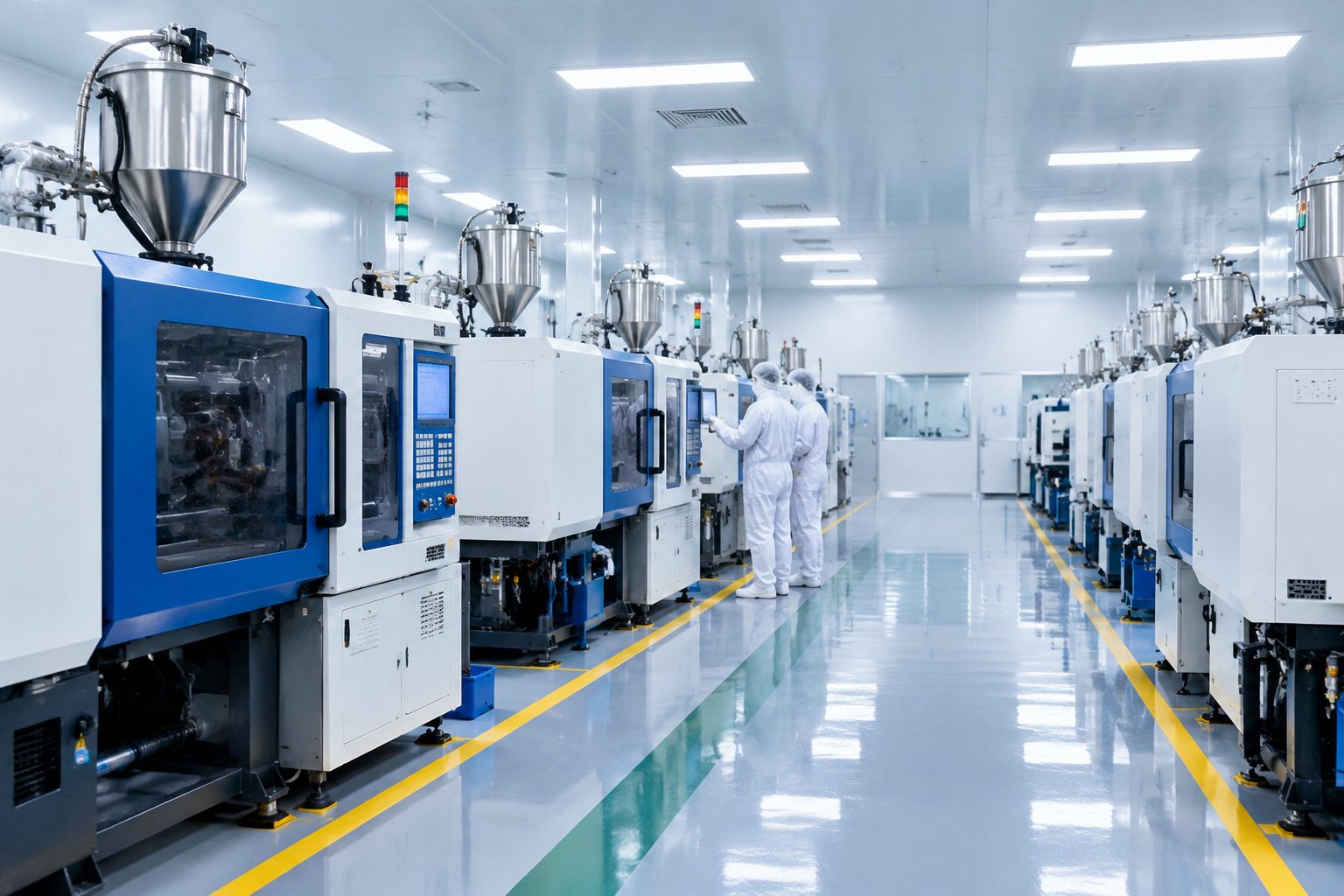
A new injection or blow mould takes three to five weeks depending on cavity count and complexity. Airless and jar tools sit at the longer end because the piston fit and lid thread need tighter tolerance.
Tooling is a one-time capital cost that belongs to the project, not a markup on the part. It is also the stage where a late design change is most expensive: after steel is cut, a change is a new tool or a weld repair.
Stage 3: sampling (7-10 days)
First samples from a new tool are typically 7-10 days after trial. Expect to review three things: dimensional fit (cap torque, pump engagement), appearance (colour, print registration, surface defects), and function (dosage, evacuation, leak).
For decoration samples, add print proofing: 3-5 days for a physical proof on the production substrate.
Stage 4: validation and pilot (5-10 days)
Before mass production, the pack should be filled on the actual filling line — or an equivalent — and put into stability and drop testing. This is where incompatibilities surface: a pump that drips with a low-viscosity formula, a label that lifts in humidity, a tube that splits at the shoulder after a drop.
Skipping this stage is the most common cause of a delayed launch. A pilot of 200-500 units is cheap insurance.
Stage 5: mass production (15-20 working days)
Standard production runs 15-20 working days after sample approval and artwork sign-off, plus decoration. Large orders or multi-component assembly add time. Sea freight to Europe adds 30-40 days; air freight 5-7 days at a materially higher cost per kilo.
What drives MOQ
MOQ is set by setup cost, not by arbitrary policy. A 5,000-piece MOQ on a stock bottle reflects a short production run on an existing mould. A 10,000-piece MOQ on a printed tube reflects the minimum economical run for offset printing. A custom mould can justify a lower MOQ because the tool is already paid for; a stock item with four-colour print often cannot.
If the launch quantity is below MOQ, the practical options are: choose a stock mould, accept a smaller colour range, or hold the balance as inventory. Each has a cost, and it is better to compare them at quotation stage than after the artwork is approved.
Where to go next
If the timeline is the constraint, the sampling and tooling process is set out at customisation; for a date-specific answer send the brief through contact us.
Specifying this for a real product? Send the drawing or a reference sample.