PCR packaging: what brands need to know before making a claim
Recycled content is now a purchasing requirement in several markets. Here is what is actually available, what it costs, and how to document it without overstating the claim.
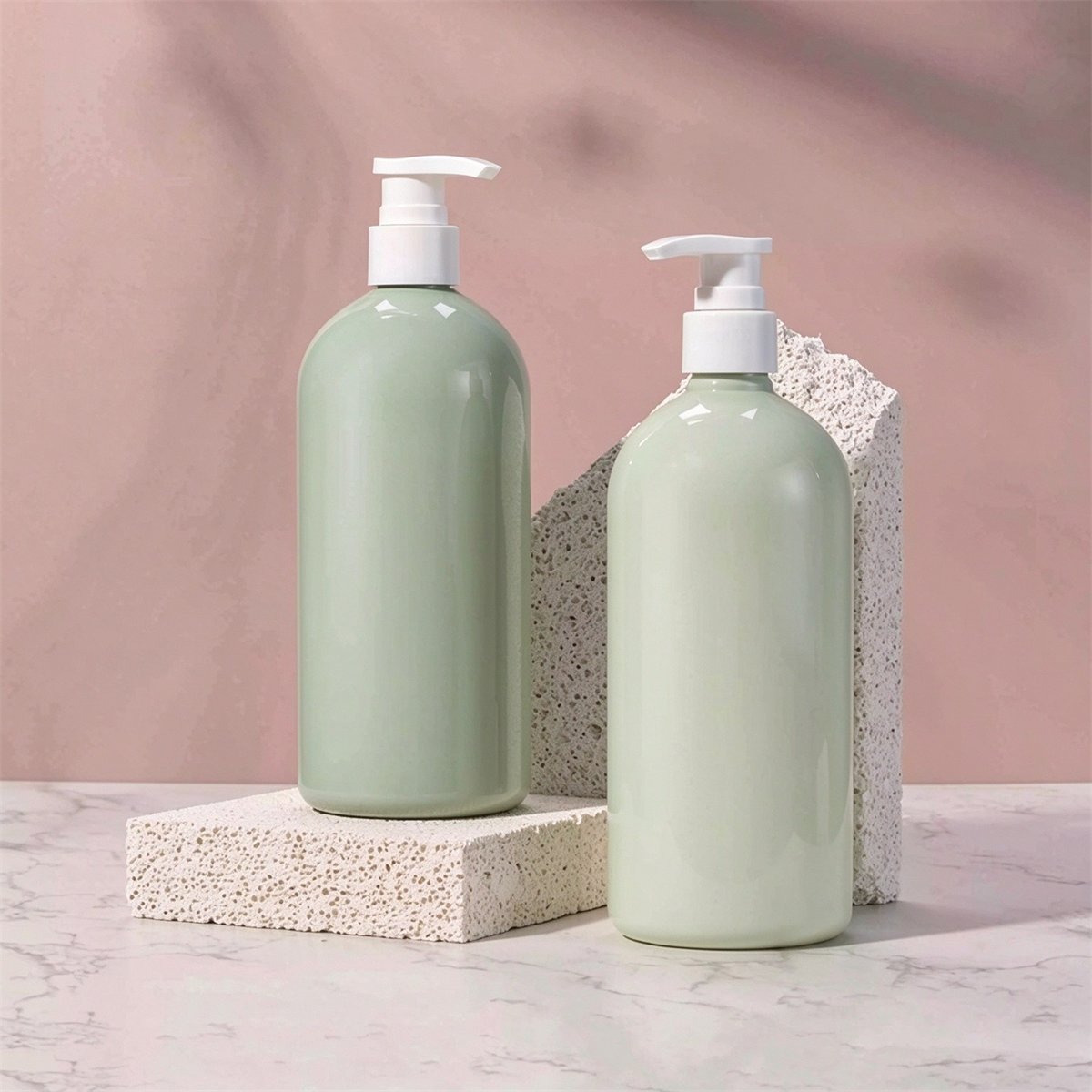
Post-consumer recycled content has moved from a marketing experiment to a line item in packaging specifications. European retailers ask for it, some Asian markets reward it, and brand owners increasingly write it into supplier agreements.
The practical questions are narrower than the discussion suggests: which resin, at what percentage, at what cost, with what evidence.
What is actually available
For cosmetics, two streams are mature:
- PCR-PET from bottle collection, available at 30%, 50% and 100% recycled content, food-grade certified in some batches.
- PCR-PP from post-consumer rigid packaging, typically 30-70%, with more colour variation than virgin resin.
PCR-HDPE exists and works well for opaque bottles and caps. PCR in tubes is less mature: the laminate structure makes recycled content harder to guarantee, so most "eco" tubes today are bio-based rather than recycled.
What it does to the pack
Three effects are predictable:
- Colour drift. PCR resin carries a warm, slightly grey tone. In a clear bottle it is visible. Most brands respond with a solid colour, a frosted finish, or a design that treats the tone as intentional.
- Cost. Expect a premium over virgin resin, and expect that premium to move with the recycled-flake market rather than with oil prices. It is not a stable surcharge.
- Processing window. PCR resin has a narrower processing window, so wall thickness tolerance and cycle time need to be validated on the specific tool rather than assumed from the virgin data sheet.
Documentation buyers should request
A recycled-content percentage on a spec sheet is not evidence. Ask for:
- the resin supplier's declaration of recycled content, per batch;
- the chain-of-custody standard used (for example a third-party certification scheme);
- a statement of which component carries the recycled content — the bottle body only, or body and cap;
- if the brand will print a percentage on pack, the basis of calculation (mass of the whole pack versus mass of the plastic components).
The last point causes most compliance problems. A bottle described as "100% recycled" usually means the body is 100% PCR-PET, while the pump, cap and label are virgin. Printing the claim without qualifiers invites a challenge in every market that regulates environmental marketing.
What to do about the rest of the pack
Recycled content in the body does not make a pack recyclable. A mono-material pack — PET bottle with PET cap, or PP jar with PP lid — recycles far more reliably than a mixed pack with a metalized collar and a metallized label.
If recyclability is the goal, decide in this order: mono-material first, recycled content second, decoration third. A shrink sleeve over a PET bottle, for example, can make the whole pack unrecyclable in sorting facilities that cannot read through the sleeve unless it is designed to release.
A realistic position
For most brands, the defensible claim today is: "bottle body moulded from 50% post-consumer recycled PET, with a virgin PP closure." It is specific, it is verifiable, and it survives a compliance review. Broader claims need broader evidence.
Where to go next
Recycled content is quoted per project rather than held as a catalogue, so the fastest route is a short brief through customisation. The full product range is at the full product range.
Specifying this for a real product? Send the drawing or a reference sample.