The RFQ pack: what to send a supplier for a quote that holds
Most quotes drift because the brief was incomplete, not because the factory changed its mind. The six data points that decide a price, and what to attach to the first email.
A quote is only as stable as the brief behind it. In practice, most of the re-quoting we do comes from three gaps: the fill volume was never fixed, the decoration was described but not drawn, or the annual quantity turned out to be the first order rather than the year.
None of that is unusual. It is worth knowing which inputs actually move the number, so the first reply is close enough to plan around.
1. The pack format and fill volume
Say the format (bottle, tube, jar, dropper) and the fill in ml or g. Not the capacity of a pack you saw online, but what your formula weighs when filled. A 50 ml label on a bottle that actually holds 58 ml changes the mould, the carton and the pallet count.
If the pack does not exist yet, send the target fill and the headspace you need. That is enough to shortlist moulds from our library at the full product range.
2. Resin, colour and recycled content
Resin decides both the price and what decoration is possible. PET, PETG, HDPE, PP, PE for tubes, and glass all sit in different cost bands, and the gap between them is usually larger than the gap between suppliers.
If recycled content is required, the percentage matters: 30% PCR and 100% PCR are different supply chains. State the percentage and whether it must be third-party certified, because that determines whether we quote virgin-equivalent resin or a certified lot.
3. Decoration, described precisely
"Printed" is not a price. Screen print is priced per colour per pass; hot stamping per impression; labels per unit plus a tooling charge; metallising per batch. Tell us which surfaces are decorated, how many colours, and whether the artwork is full wrap or a single panel.
If artwork is not final, say so. We can quote decoration as an allowance and lock it when the file arrives, which is faster than waiting for a finished design.
4. Closure and any secondary parts
A pump, dropper, disc-top or flip-top is usually quoted as a set. If the closure is customer-supplied, say it now: the neck finish has to match, and a mismatch found at sampling costs a mould change.
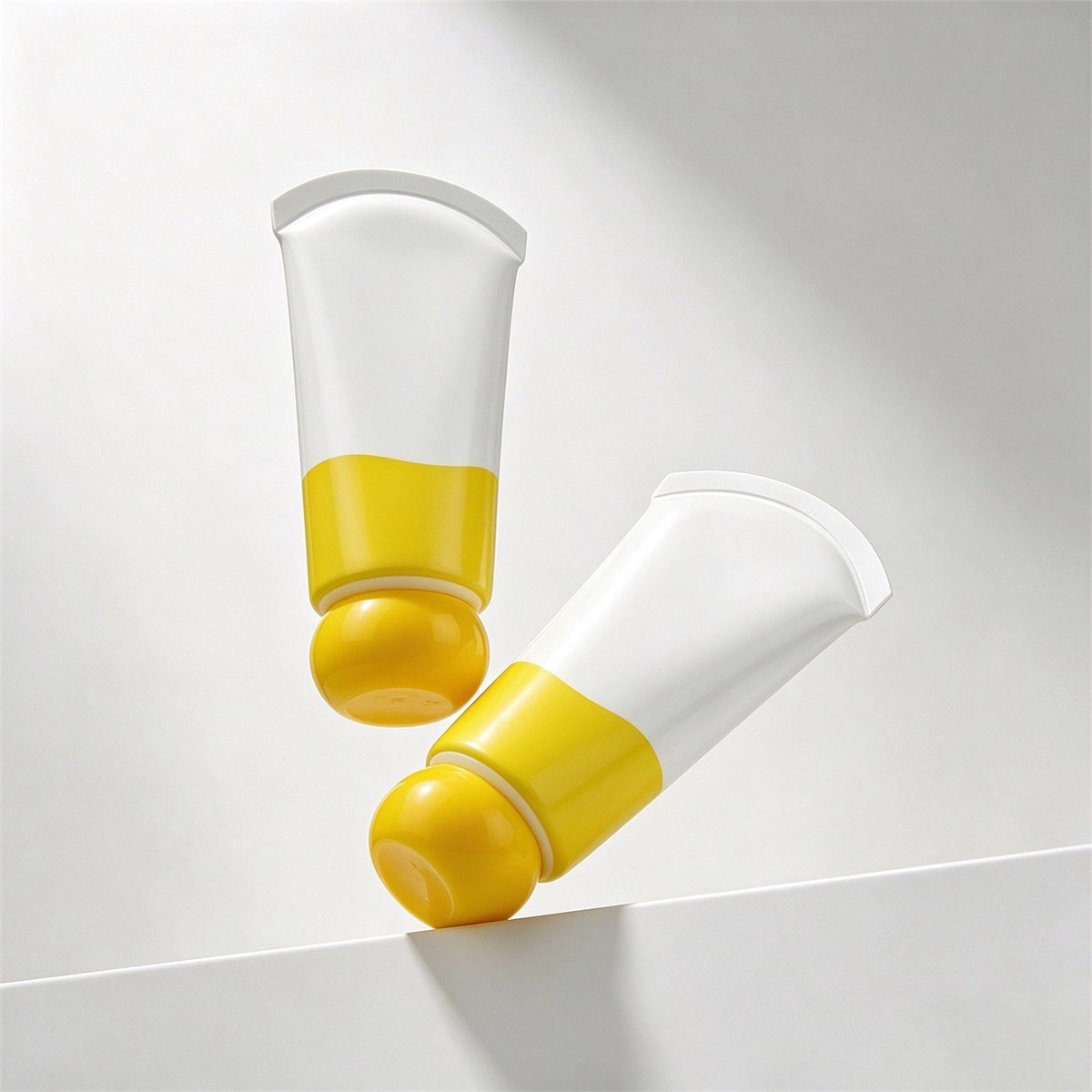
For applicator formats, the head type matters as much as the tube. Our applicator range at applicator tubes shows how much the head changes both price and lead time.
5. Packing method and destination
The same bottle quoted bulk-packed and quoted individually bagged with a divider can differ by 8-12% per unit. Tell us the carton count you expect, whether you need inner trays, and the destination port or door.
Destination also sets the transit test: an ISTA-style parcel simulation for e-commerce, or a stacking test for a palletised sea shipment. Both change the carton specification.
6. Volume, split by colour
Give the annual volume and how it splits across colours or sizes. A 100,000 piece order in one colour prices differently from 100,000 split across six. The moulding run length is what drives efficiency, and a colour change costs a purge.
If the launch is staged, say the first drop and the rest. We would rather quote the whole programme at the right run lengths than quote the first drop at a premium.
What comes back
With those six, a quote can be issued with the unit price, tooling, sample lead time, production lead time, MOQ per colour and the packing specification. If any input is missing, we will state the assumption next to the number rather than bury it.
The short version
Send the format, the fill weight, the resin, the decoration in colours and surfaces, the closure, the packing and the volumes by colour. That is the whole brief. Everything else is negotiation.
Specifying this for a real product? Send the drawing or a reference sample.