Tube selection: ABL, PBL or PE?
Three laminate structures, three different jobs. A short guide to choosing a cosmetic tube by barrier requirement, recycling position and decoration.
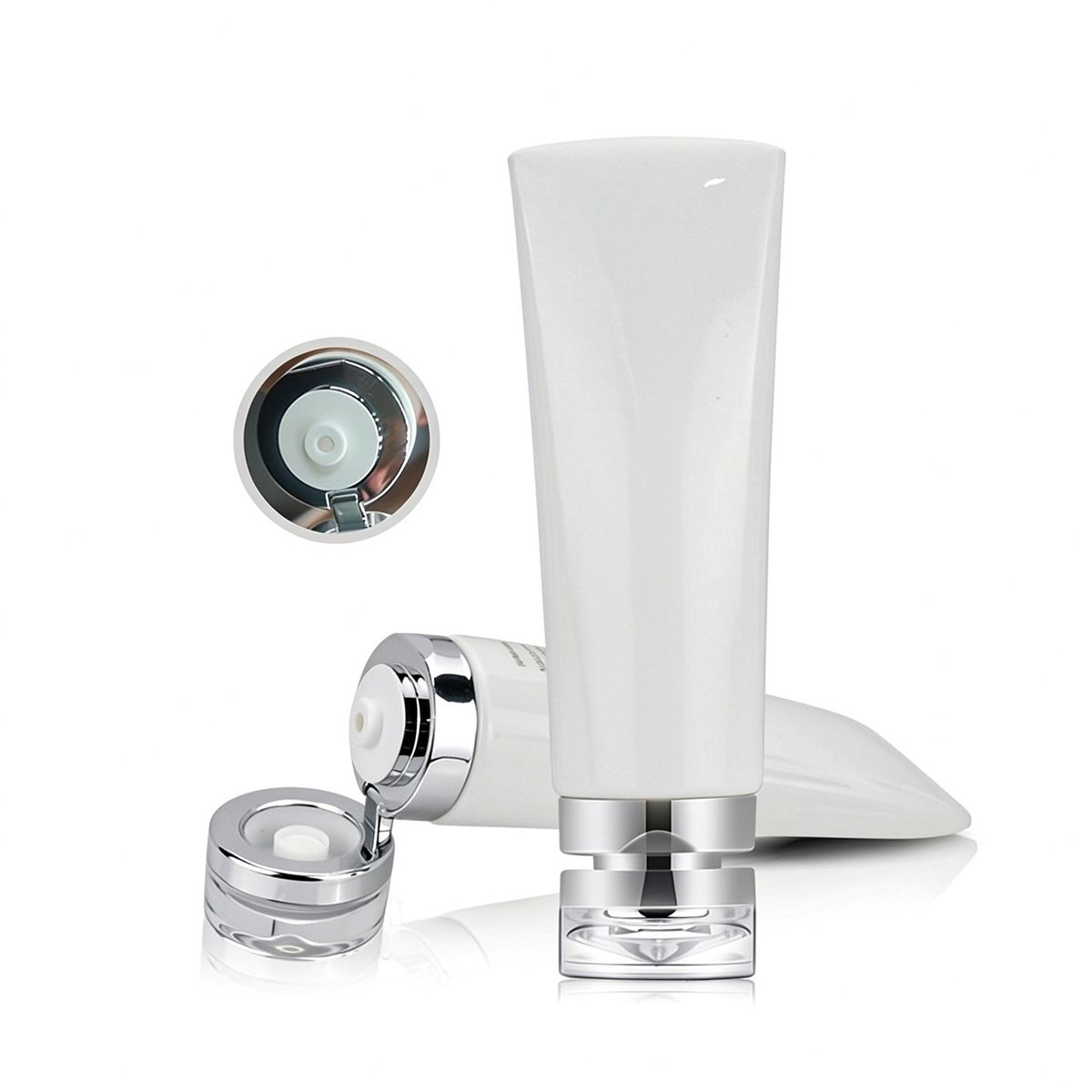
Almost every cosmetic tube looks the same on a shelf. Underneath the print, the structure decides how the pack performs in storage, how it is decorated, and whether it can be recycled.
ABL: aluminium barrier laminate
ABL places a thin aluminium layer between plastic films. It delivers the best oxygen and light barrier of the three, and it feels substantial in the hand.
Use ABL for oxidation-sensitive formulas, for products with a long shelf life in warm climates, and for markets where barrier is regulated rather than optional. The trade-off is recyclability: the aluminium layer means the tube does not belong in a PE stream, and the print quality is excellent but the pack is not mono-material.
PBL: plastic barrier laminate
PBL replaces aluminium with an EVOH barrier layer. Barrier performance is lower than ABL but sufficient for most skincare, and the whole tube becomes PE-based, so it can enter the PE recycling stream.
PBL is the pragmatic middle: good protection, better end-of-life story, similar print quality. For brands making a recyclability claim, PBL with a PE cap is usually the defensible choice.
PE: single-layer
A single-layer PE tube is the simplest structure and the cheapest. Barrier is low, so it suits lip gloss, hand cream, and products with a short use window or a formula that is not oxygen-sensitive.
Because it is one polymer, it is the cleanest recycling story of the three. It also takes the widest range of decorations relative to cost, including full-wrap labels for short runs.
Decoration differences that matter
All three accept offset or flexo print, but the substrate changes the result:
- ABL holds fine halftones and metallic inks well, and it does not spring back when squeezed, so the print stays crisp.
- PBL prints well but has slightly more surface texture; very fine reverse-out text can fill in.
- PE needs a corona treatment before printing, and light colours can look milky over a translucent body.
If the artwork depends on a large solid black or a fine gradient, request a printed sample on the actual structure before approving. A digital proof on paper will not show the difference.
The decision in one line
Choose ABL when the formula needs protection, PBL when the brand needs a recyclability position, and PE when cost and simplicity decide. Then confirm the cap: a mono-material pack is only as recyclable as its closure.
Where to go next
The sub-categories are separated by barrier rather than by shape: PE tubes and ABL and PBL tubes.
Specifying this for a real product? Send the drawing or a reference sample.